
Mindful Breathing, ENLARGED
The art of energy transformation

I’m writing today to experiment with the possibility of expanding and enhancing what I already take to be the most important, most transformative form of meditation practice—the practice of mindful breathing. Although this ancient meditation exercise began in India over two millennia ago in various Buddhist and Hindu forms, it is now practiced in virtually every global culture for a wide range of religious and secular purposes. My experiment proposes 3 different levels of mindful breathing practice, each summarized here to get us started:
First, as outlined in an early Buddhist sacred text named simply “Mindfulness of Breathing” (Anapanasati sutta), this meditative practice recommends paying continual conscious attention to what are otherwise unconscious respiratory processes. You just focus your mind on breathing. You notice air entering your nostrils, expanding your chest and abdomen, and rhythmically exiting without making any effort to alter any part of this process other than your increased mental awareness of it. That’s it. But anyone who has tried this meditation practice will understand how difficult it is to remain consciously focused in this way and how profoundly transformative it is for anyone who through continued practice experiences some degree of mind/body illumination by means of this exercise.

Second, adding a reflective dimension to the first level of unreflective observation, we ask ourselves several related questions: What might an internalized, objective understanding of the mechanics, chemistry, and biology of breathing contribute to the subjective observation that occurs in the practice of mindful breathing. Does understanding what’s actually going on when we breath deepen and expand the direct experience that observation provides? And one step further, what does scientific investigation tell us about possible ways to improve respiration beyond the meditative act of watching it without judgment? Is there a serious difference between healthy and unhealthy respiratory habits? Can breathing be made even more effective through intelligent attention to it? What we’re asking through these questions is: Can a profound understanding of respiration be practiced in conjunction with mindful breathing so that the two illuminate each other and eventually join together as one? Below I make the case for answering these questions in the affirmative.
Third, experimenting with an expansive visualization dimension of this meditative practice, we ask how this practice might be made even more meaningful by cultivating an awareness that stretches out beyond our own individual breathing to respiratory rhythms far beyond our own.
Respiration isn’t just what I do; it is what all living beings do in conjunction with each other—everything from animals to whole forests to what the entire planet does through processes like the weather cycles of evaporation and condensation.
The earth’s breathing is the very foundation of my breathing—they are inseparable processes. My breathing just participates in that much larger, global process. So, while I focus on my personal respiration I can visualize and cultivate an awareness of how the breathing that sustains my life is part of larger respiratory processes that have created and maintained life on earth from the very beginning. Does the awareness of planetary non-duality that this exercise fosters—my immersion in the respiration cycles of life itself—enhance the elevation of mind that occurs at the first two levels of mindful breathing, or does it just get in the way of it? I experiment below with a positive answer to this question.
Here are those three dimensions now in some explanatory detail:
First Dimension: The basic practice of mindful breathing is an explicit exercise that maintains concentrated attention on the experience of breathing that we have always done without paying any attention to it at all. There is no acknowledged goal to this practice other than focusing your mind on these internal processes—to be continuously mindful of your own breathing. No effort is made to alter anything about your breathing. Just observe it, become aware of it, follow it as it takes you through the ongoing cycles of in and out, in and out.
Here are typical instructions given for this practice: Sit in a relaxed but upright posture, spine mostly erect so that your lungs are open rather than restricted in any way. Allow your natural breathing cycles to occur just as they always have and simply observe. Just pay attention as air enters your nostrils, settles into your lungs, and exits through your nostrils. When thoughts arise, or images or memories or emotions, or desires, or anything else, just acknowledge that appearance in your mind without pursuing it further, and without judgment return to focus on your breathing. Those are the basics. Not complicated, really, but not easy to do because this level of concentration is an acquired skill, acquired through exercises like this one. Just do this for ten minutes or more every day. Increase the amount of time devoted to this practice as you begin to sense its value.
A very important dimension of this practice entails recognizing distractions, everything from bodily sensations to feelings, thoughts, memories, pains, plans, and desires. The goal of mindful breathing is not to eliminate these mental intrusions but just to recognize them for what they are and to let them pass through your mind by returning to mindful breathing.
Calling them “distractions” or “intrusions” is ultimately inappropriate since these movements are what human minds are designed to do. You wouldn’t want to be without them.
The goal of the practice is not to eliminate them but to cultivate awareness of their role in your mind and gradually to sense their arising out of an even more fundamental level of consciousness that, with practice, could serve as your default mental state. Mindful breathing, therefore, is both minding your breath and minding your mind through non-judgmental observation. It is an incredibly effective method of introspective self-awareness. You get to observe what goes on inside for the first time and you learn to become consciously connected to the ground level respiratory process that keeps you alive.
Second Dimension: A second of three dimensions to mindful breathing could be—and occasionally is—added as a supplement to the practice of respiratory observation. Unlike the first level of mindful breathing, this second dimension begins as a reflective practice—an act of learning and thinking about what breathing is. Without this learning and thinking, we don’t really understand what happens when we breath no matter how mindful we are of it, nor why we do it beyond the simple fact that it keeps us alive.
When asked, children typically say that breathing is what our nose does. But our nose is simply the outer passageway for an incredibly complex respiratory system which is itself connected to larger circulatory and digestive systems. Our bodies initiate a breath not by anything our nose does but by a brainstem signal that triggers a contraction of the diaphragm muscle down beneath our lungs and to a small extent contractions of intercostal muscles which together lift and expand our rib cage drawing air down through our nose and throat and into our lungs. When the contraction ends the expansion of our lungs, air is pressed back out again and a new cycle begins.
But until we learn more about this process, we don’t understand why our bodies do it. We don’t understand what it is about the respiratory process that keeps us alive. We can observe and be mindful of our breathing without any understanding of the role it plays in our lives. That requires learning.
Respiration, along with digestion, provide the fuel that we run on. The oxygen that our lungs absorb from the air enters the blood stream that our heart pumps and circulates to every cell in our bodies. There it fuels an internal chemical reaction that breaks glucose from digested food down into energy and growth for every cell in our bodies. Just as important, it collects and expels the waste products from this process—CO2 and other chemicals—that are transported by our circulating blood back to our lungs and exhaled out of our bodies and back into the air.
We do this without effort 10 – 15 times every minute of our lives, adding up to somewhere around half billion breaths in a typical lifetime. One astonishing realization about this process is that it can work perfectly well for decades without our even noticing it and without the need for repair or replacement. The entire system rejuvenates itself while working 24/7. The building materials that the system circulates to every other body part also continually rebuild the respiratory system itself. It’s a brilliant design—perpetual motion for up to a century.
This is just the most rudimentary description of physiological systems whose intricacies scientists are still learning. But like me, many people who are not scientists or physicians have made a point of understanding this minimal account of respiration. I review this simple description to myself on occasion to continue cultivating a real connection to these processes, to build over time an embodied awareness of what my breathing really is. It matters. To tell myself that I “know” these facts learned long ago neglects the realization that this level of “knowing” is static and inconsequential—it has no bearing on the way I breath or the way I live. Only by taking that knowledge down to a deeper, more visceral level does it allow me to truly feel and appreciate the breath I take and through that appreciation to deepen and transform the respiratory process.
This transformation is another important part of the reflective dimension of mindful breathing. Beyond an understanding of how respiration works is an understanding of the significant differences between deficient breathing, normal breathing, and enhanced breathing. In meditation and physical fitness circles this takes us into what has come to be called “breathwork,” the development of conscious breathing for the purpose of improving it.
As we’ve learned, respiration is unusual among our bodies’ various physiological systems in being located right at the boundary between automatic/involuntary and voluntary processes. Breathing occurs naturally and automatically under the control of the brainstem, the deepest, most primitive part of our brains, until other parts of our brain—the primary motor cortex and prefrontal cortex—choose to take control on rare occasions.
The goal of breathwork as a practice is to develop some degree of freedom in relation to the oxygen and CO2 levels in our bodies. With slower, deeper, more rhythmic breathing we’ve learned that the parasympathetic nervous system is activated. That action reduces heart rate, lowers blood pressure, and decreases stress hormones. This change then produces overarching feelings of relaxation and confidence, improves concentration, and allows greater emotional awareness. Rather than allowing outside stimuli to determine our physical, mental, and emotional states, we can take some degree of control of breathing and influence all the aforementioned factors from blood pressure to mood and emotion.
Modulating breath consciously we gain some level of inner freedom in body and mind.
Of course, the basic practice of mindful breathing is very different from the reflective learning that we’ve featured at this second level. The first is pure, focused observation and the second pursues understanding and wise judgment. You can’t do them at the same time. Either you just observe your respiratory processes, or you seek to understand and enhance them. But if both are engaged on separate occasions, they gradually merge over time. Once you’ve mastered the processes of respiration conceptually to the point that you don’t have to think about them, and once, through breathwork, you’ve developed your breathing into slower, deeper rhythmic patterns, what were at first thought processes settle into your mind at a much deeper level. All this is absorbed to become a greatly expanded but still embodied dimension of mindful breathing.
Third Dimension: Everything said so far concerns the mindful breathing of a single, individual breather. I engage in mindful breathing practice for my purposes having to do with my mind and my breath, and I take up breathwork to improve my respiratory capacity. It’s all about me, or you, as individuals. We each focus on how to do it and how or why it’s good for us as individuals. While all that is as it should be initially, the conceptual framework these activities assume is highly self-enclosed and dualistically isolated. It encourages us to go on living as though we are very much separate from the rest of the world. In abstract intellectual terms, we know we’re not, but we go on living as though we are.
A third dimension of mindful breathing expands our meditative horizons and our awareness exponentially. It has us visualizing all the ways in which our breathing is an extension of the entire planet’s breathing. The cosmic creation of the planet earth includes the creation of the centripetal and centrifugal rhythms of respiration through which everything alive on the planet lives.
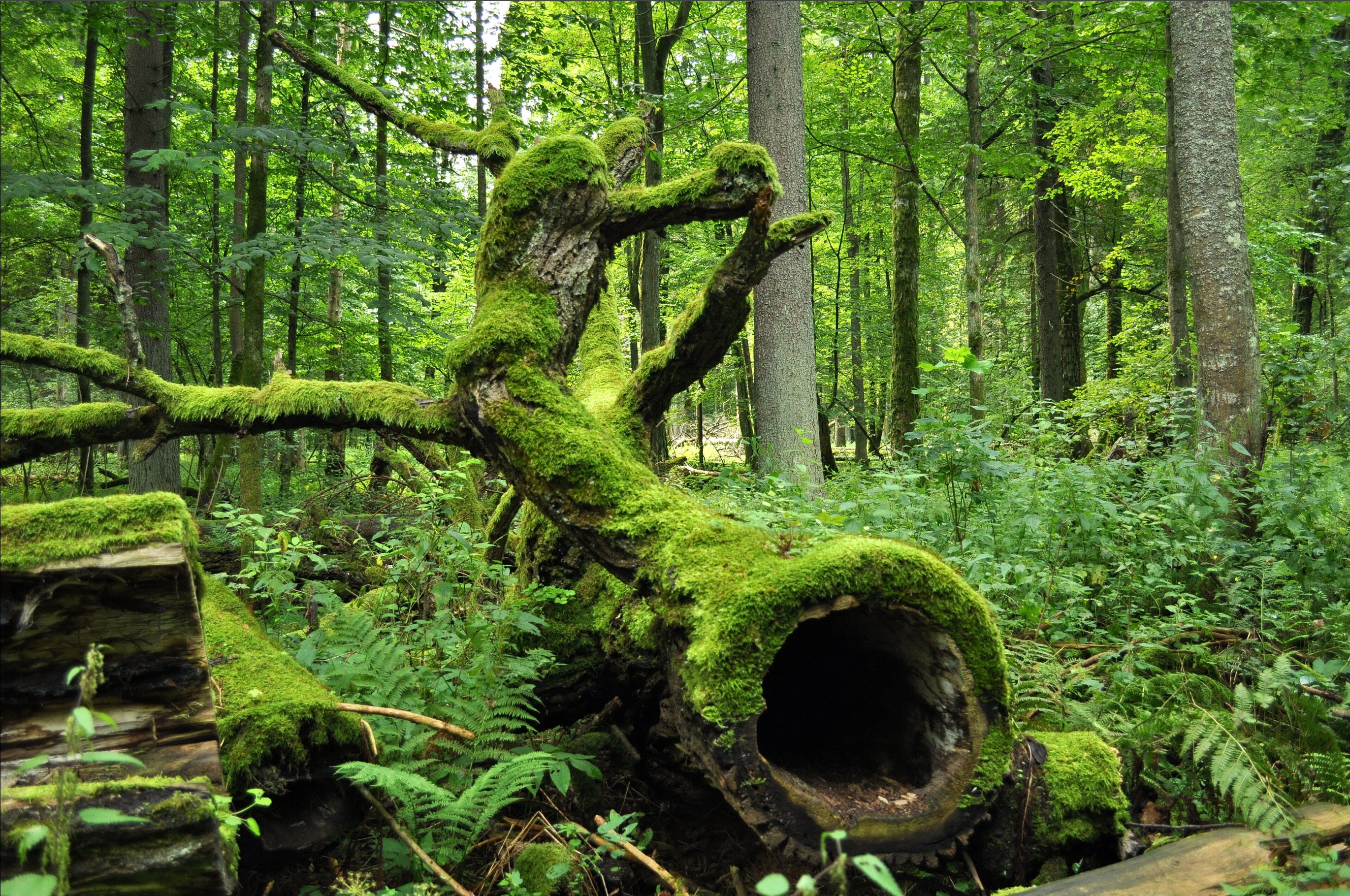
The most obvious example of this reality is botanical life on earth. The world’s forests are called the “lungs of the earth.” Trees engage in continual in and out motion, constantly exchanging gases, water, and energy with their environments. Inhale and exhale. Trees absorb the CO2 that we exhale and during daylight hours convert it into oxygen that is released into the air for our breathing. We live in a beautifully reciprocal respiratory relation to forests. Like us, they take part in a vast rhythmic cycle of planetary exchange and mutual renewal. Through practice, we can learn to be mindful of that essential truth in our practice of conscious breathing.
Like human beings and forests, oceans continually exchange gases with the atmosphere above them. The oceans absorb enormous quantities of CO2 from the air and in exchange release vital portions of oxygen. The inhalation and exhalation of the vast waters reflect and harmonize with ours. While breathing, I can practice being mindful of the respiratory rhythms of the ocean and its vital relation to my own.
Volcanoes are the respiration mouth pieces of the core of the planet earth.
Volcanoes constantly release gases from magma in the deepest layers of the earth. Degassing, they exhale water vapor, CO2, sulfur dioxide, and more through eruptions, vents, and hot springs. The atmosphere that is replenished by them is the breath of the earth. Through many processes, everything exhaled is inhaled back into the earth—CO2, rocks, sediment, gravity pulled water and much more. The earth’s interior and exterior cycle back and forth—centripetally and centrifugally—as a dynamic, living process.
We are alive only because the earth is alive. We breath only so long as the earth keeps breathing. My breathing is anything but an isolated individual matter, and a consciously cultivated awareness of that truth puts me in touch with the ground of my existence.
Mindfulness of this truth through visualization exercises expands the scope of our minds and the depth of our breathing. By contemplating that much-larger, non-dual reality of respiration, we are engaged with images that are literally true, and can through practice bring that truth to bear on our own acts of mindful breathing.
It is no accident that many of the world’s early cultures identified “breath” with the spirit or soul of persons or animals. Individual beings and the planet as a whole are living only as long as they are breathing. The animating spirit of all life on earth is fundamentally respiratory. Expanding the range and scope of mindful breathing exercises holds the potential to reawaken an ancient sense of the interdependence of all living beings and their deepest identity with the planet earth.
We offer Fire Philosophy as a space for living questions—for Nietzsche’s provocations, Zen’s paradoxes and silences, and the uneasy beauty of learning how to live with courage and imagination.
We offer this free of charge. But if you find value in our brief essays, video interviews and dialogues that challenge and unsettle our lives while nourishing and invigorating them, please consider becoming a paid subscriber or sharing us with others. Your support keeps stoking our collective 🔥.
~ Krzysztof and Dale
Thank you for this beautiful piece ~ it’s such a gift❤️
This is a breath of fresh air, so to speak. Clear, intelligent, instructive writing without any gobbledygook. I feel inspired to start a breathing practice for the first time in my many, many decades of life.